Check Writing
How to Write a Check Lessons
Our Check Writing section offers a comprehensive collection of educational tools to guide you through the process of writing personal and business checks. You'll find detailed lesson plans, hands-on worksheets, and interactive tutorials.
Our lesson plans and worksheets are thoughtfully designed to equip you with the practical skills needed to write checks correctly and securely. Suitable for classroom instruction or self-study, these resources can be tailored to fit your specific learning objectives.
Dive into our interactive tutorials for a hands-on approach to mastering check writing. These tutorials cover everything from filling out the payee to writing the dollar and cent amounts, ensuring you get every detail right.
For those seeking a deeper understanding, our informational articles provide a thorough look into the nuances of check writing, including common mistakes to avoid and best practices to adopt. Regardless of your prior experience or learning preferences, the Check Writing section of Money Instructor will help you become proficient in writing checks and managing your finances effectively.
Also, see our main checking category for our comprehensive check lesson material, tutorials, and to practice check writing including writing dollars and cents.
How to Write a Check
The basic steps of how to properly write a check with pictures.
How to Write a Check Animated Lesson
How to Write a Check Animated Lesson
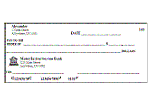
View an animated lesson of how to write out a check. A check is a written order to pay someone a specific amount of money on a certain date. This interactive lesson will take you through the steps of how to write a personal check. Check writing example.
How to Write a Check Video Lesson
How to Write a Check: Step-by-Step Guide for Beginners Lesson
A lesson on the essential steps and tips of check writing. Covering every step of filling out a check to someone from dating the check to dollars and cents, and the essential final signature. This lesson guides students on how to correctly write a check, from filling in the date, correctly specifying the payee, writing the amount in numerals and words, to signing the check. Additional insights include the importance of the “Memo” section, and essential tips like using a pen in blue or black ink, starting a new check if mistakes are made, and tracking check transactions to avoid surprises.
How to Write a Check with Cents Lesson
Check Writing Simulation
Now that you know how to write a check, practice entering your own check information with this check writing simulation.
Check Writing Worksheet
How to Write a Check Worksheet
What are the important parts of a check? Print out the steps necessary for writing a check to use for your own check writing, or to use with our other check writing lessons.
Check Writing Terms and Definitions:
Payee: The party that receives the check.
Payor: The party that writes the check (to the payee).
Check Register: A booklet that is used to keep a record of all your checking related transactions, including checks written and deposits.
Check Stub: A strip on the side of some checks that is torn off. Used to keep record of the amount of the check.
Endorse a Check - Check Endorsement: When the payee signs their name on the back of a check to cash or deposit the check.
Balance: The amount of money currently in your checking account.
Non-sufficient Funds: When you write a check for more money than you have in your account.
Minimum Balance: The minimum amount of money required in your account. Having an amount less than the minimum balance may result in extra service charges or reduced privileges.
Service Charge: An amount the bank charges (fees) for use of the checking account.
Important Points
After viewing the above lessons, here are some important additional points to keep in mind when writing a check:
- Be sure not to leave any blank areas on your check. The safest method is to draw a line through any open spaces.
- When writing the check amount, be sure to always start at the beginning (the far left) of the line. This will help ensure no one can make any unauthorized changes to your check.
- Write clearly and only use ink when writing your check to help prevent any alterations or changes.
- Your check is not legal until you sign it. However, keep your checks in a safe place until you are ready to use them for payment. Also, never sign a blank check.
- If you postdate your check, it may not be cashed until on or after that date. However, it is recommended that you do not postdate checks. Banks often process the check even if it is postdated, if they do not notice the date. They may also charge an additional processing fee.
- Make sure the amount box (where the check amount is written in numbers) and the amount line (where the check amount is written in words) match.
- If you make a mistake when writing a check, write "VOID" in big letters on the check and tear it up. Keep a record in your check register of voided and canceled checks.
- Be sure to keep a record of all your written checks in your check register and track your check numbers. Each new check should be written with the next available check number.
- When paying by check in person, be aware that you may need to show proper identification, such as a driver's license, passport, or other forms of ID.
- Ensure that the numbers written out in long-hand on the check match the numbers written in the box. Bank employees often only look at the numbers written out in words and might ignore the numbers written in the box.
- A common mistake is writing an amount such as $100.42 incorrectly as "One hundred forty-two" instead of "One hundred and 42/100." Doing this could result in the larger amount being deducted from your account.
- Instead of first writing the check and then recording it in your checkbook, consider recording it in your checkbook first. This can help prevent forgetting whom you wrote a check to and for how much, especially if you were in a hurry or simply forgetful.
Back to more Checking and Check Writing Lesson Categories